Dronestellar
CAD concepts + software prototype
Dock designs and a working command-and-control simulation for managing drone readiness, launch and recovery across a station network.
- Dock design, simulation and operator workflow
- Fusion 360
- MATLAB
- Python
- JavaScript
- Docker
- Dock formats designed
- 3
- Sites in the simulation
- 3
- Shared operator console
- 1
CAD renders
Simulation
Problem
Launching a fleet involves more than sending a take-off command. Each drone needs a readiness check, an available launch path and somewhere suitable to recover. When aircraft share a site, arrivals and departures compete for the same space.
Dronestellar brings those ground operations into one workflow. I developed the project through the Singapore Defence Tech Hackathon, with dock designs and a simulation of how an operator would manage a network of stations.
My role
I worked on the docking station designs, the simulation and the command-and-control workflow. The mechanical work explored storage layouts for different drone footprints. The software work connected inspection status, launch choices and recovery decisions so that an operator could see what each drone was doing.
The radar replay uses simulated data supplied by the Swarmbreakers team. My project’s contribution is its integration into the operator workflow; the radar detection system is their work.
Approach
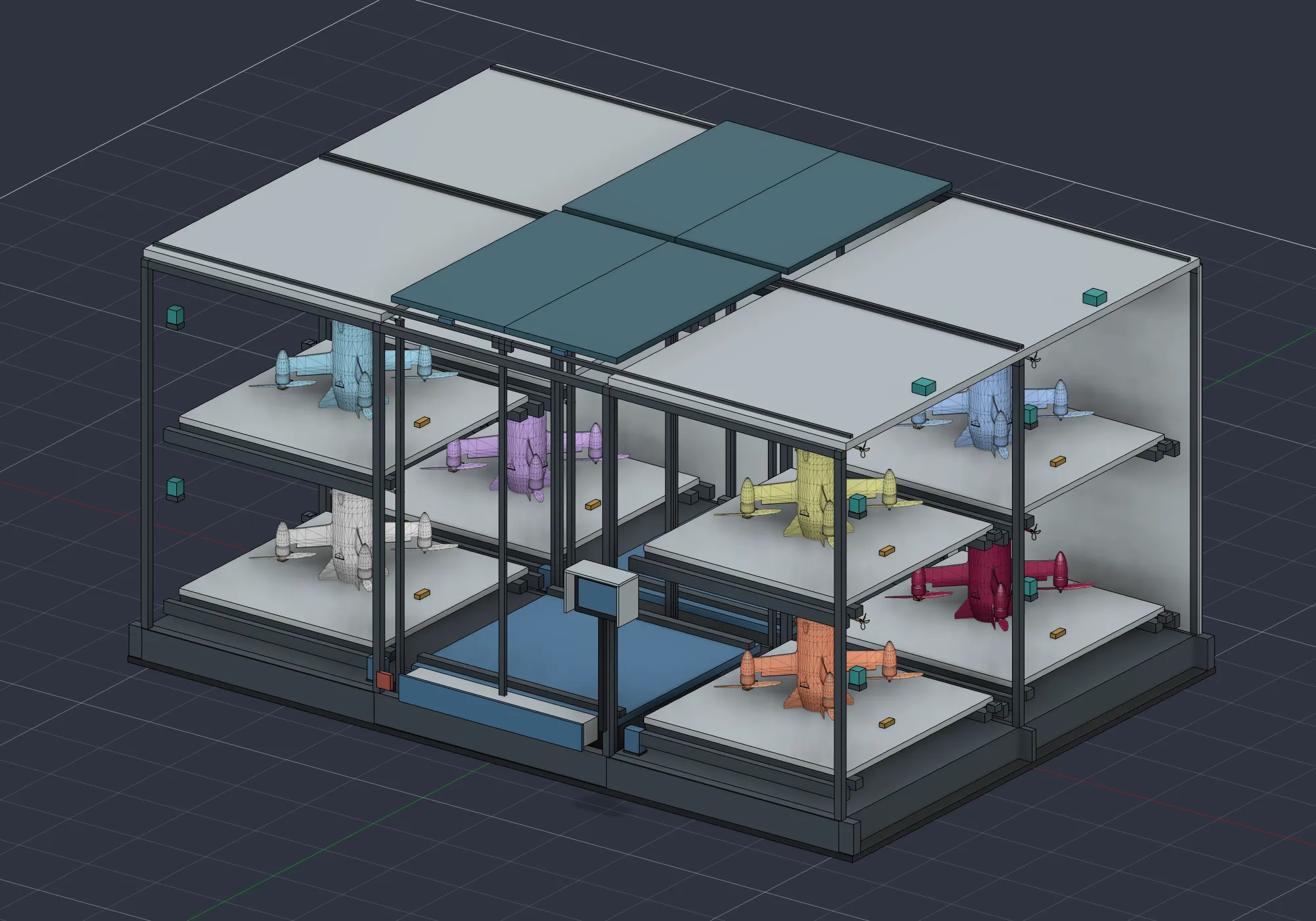
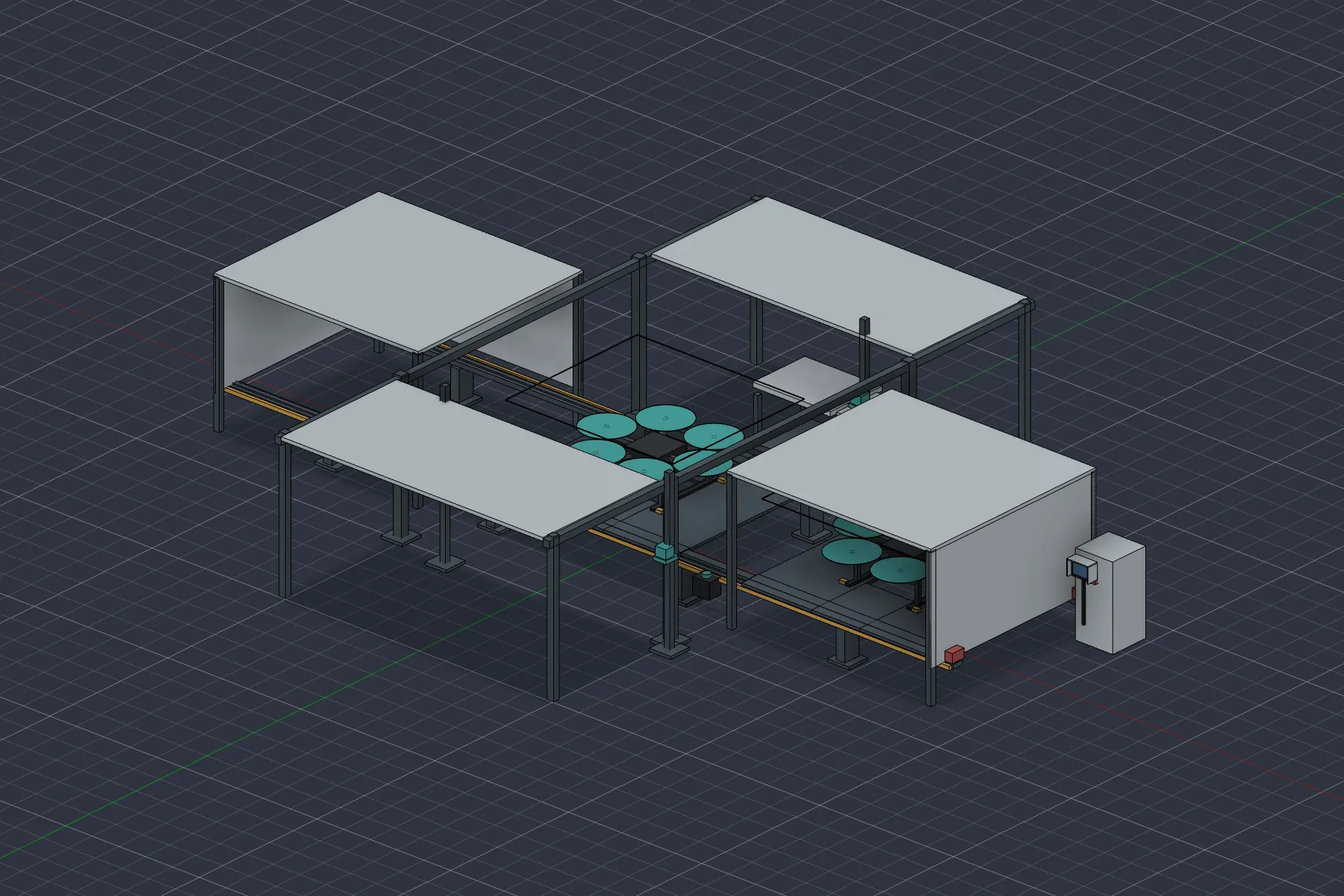
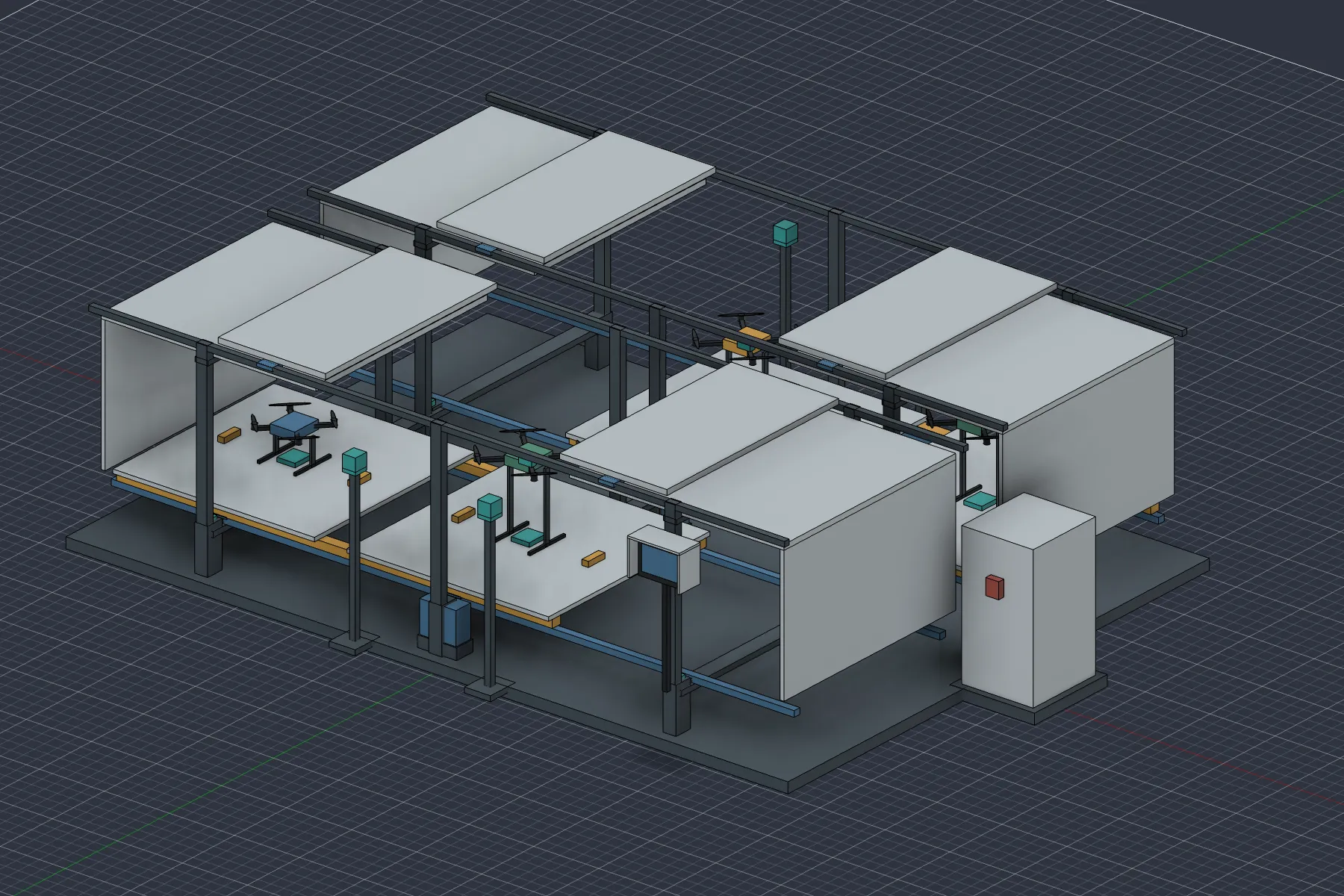
Design around the aircraft. I used Fusion 360 to explore three dock formats: two independent hexacopter pads, a compact four-drone layout, and an eight-aircraft P1 dock across two levels. These are CAD concepts for evaluating the arrangement of bays and launch access.
Keep control and visualisation connected. MATLAB supported the geometry and flight-profile work. A Python backend manages the simulated aircraft and station states, while the browser console provides controls and a 3D view. The browser version made the demonstration easier to run on another computer without a MATLAB installation. The submission also includes a Docker package for Apple Silicon.
Make readiness affect the launch. The model uses simulated inputs for battery condition, communications, sensor health and temperature. Inspection failures hold an aircraft on the ground, with a reason shown to the operator. These inputs exercise the readiness rules; they are not measurements from installed dock sensors.
Coordinate departures and arrivals. Standard mode gives queued recovery priority. Rapid mode prioritises departures from independent docks, with holding constrained by the model’s endurance assumptions. An operator can also approve recovery at a different compatible site, after which the software reserves a receiving bay and manages the handover.
Verification
The release evidence records 80 passing Python test executions across the core logic, parallel launch scheduling, landing advice, handover, traffic messages, HTTP interface and weather controls. The archived verification covers application release 1.6.0, packaged as 1.6.1, tested locally on Apple Silicon with a Linux ARM64 image.
| What was checked | Evidence in the software release |
|---|---|
| Launch permissions | Held aircraft and expired readiness are rejected through the HTTP interface. |
| Parallel deployment | Tests exercise launches from independent docks and shared operating constraints. |
| Recovery and handover | A browser test follows an approved transfer through landing and renewed readiness at the receiving site. |
| Weather restrictions | A thunderstorm scenario disables launches at the affected site; changing the scenario restores eligibility. |
| Repeat commands and connection loss | HTTP tests cover duplicate requests and disconnect/reconnect behaviour. |
The timing study recorded 45 take-offs in 79.75 model seconds with an initially ready fleet, clear weather and empty airspace. This is a result for that simulated starting condition, not a measured hardware deployment time or a guarantee for a different fleet size.
View the recorded test summary.
Result
The project produced three dock concepts and a working software demonstration spanning readiness, launch and recovery across three sites. It gives me a way to examine how a station network behaves before committing to a physical build.
The next engineering step is a bench prototype of the docking and servicing mechanism. Physical battery exchange, sensor-based inspection and precision landing still need hardware integration and testing. The software demonstration establishes the operating workflow; a physical prototype is needed to establish its real-world performance.